


Japanese names that mean sun often come down to one small character: 日 (hi) or 陽 (yō, haru). Add a second kanji and the meaning shifts. 日向 reads as “sunny place,” while 陽翔 means “soaring sun.” Small choices in writing change the whole name.
Japanese names are written in kanji, and one sound can carry several meanings. Haruto, for example, can point to the sun or to clear weather. A list of sounds alone can mislead, so each name below comes with its kanji and meaning.
This guide gathers 195+ Japanese names that mean sun, plus dawn, daylight and radiance names. They’re grouped by theme, with readings, Shinto myth links and a few pronunciation tips. Quick picks: Hinata, Asahi and Haruto.
Japanese Sun Name Styles
Use this table to match a style of Japanese sun names to the feeling you want.
| Name Style | Source | Vibe | Best For |
| Sun kanji names | 陽 and 日 | Warm, cheerful | Everyday use |
| Dawn names | 暁, 曙, 旭 | Fresh, hopeful | Early-morning births |
| Brightness names | 明, 昭, 晃 | Clear, sharp | Boys and unisex |
| Clear-sky names | 晴, 空 | Open, calm | Gentle choices |
| Myth names | Shinto stories | Sacred, rare | Writers, creators |
| Radiance names | 輝, 照, 光 | Shining, modern | Modern families |
| Traditional names | Showa era | Classic, formal | Older-style picks |
| Short names | One-kanji forms | Simple, crisp | Easy pronunciation |
Japanese Sun Names Worth Discovering in 2026
Start with five picks that show the range. Hinata and Haruto have been popular in recent years, while Asahi and Akira feel classic.
- Hinata (日向) — Sunny place
- Haruto (陽翔) — Sun, soaring
- Asahi (旭) — Rising sun
- Himari (陽葵) — Sun, hollyhock
- Akira (明) — Bright, clear
My pick for a first look is Asahi, since the sound is easy for English speakers.
How Japanese Kanji Creates Sun-Related Name Meanings
The kanji 日 means sun and day, and it reads hi in names like Hinata. The kanji 陽 adds a warmer, brighter feel and can be read yō or haru. Other characters bring dawn (暁), brightness (明) or shining (照).
A second kanji sets the direction. Add 向 (facing) and the sun has a place to shine. Add 翔 (soar) and it moves. Four examples show the pattern.
- Taiyō (太陽) — Great sun, plain word
- Yōko (陽子) — Sun child
- Hiyori (日和) — Fine weather
- Akatsuki (暁) — Dawn
Check each character, because the kanji choice decides the meaning.
Traditional Japanese Names Connected to the Sun
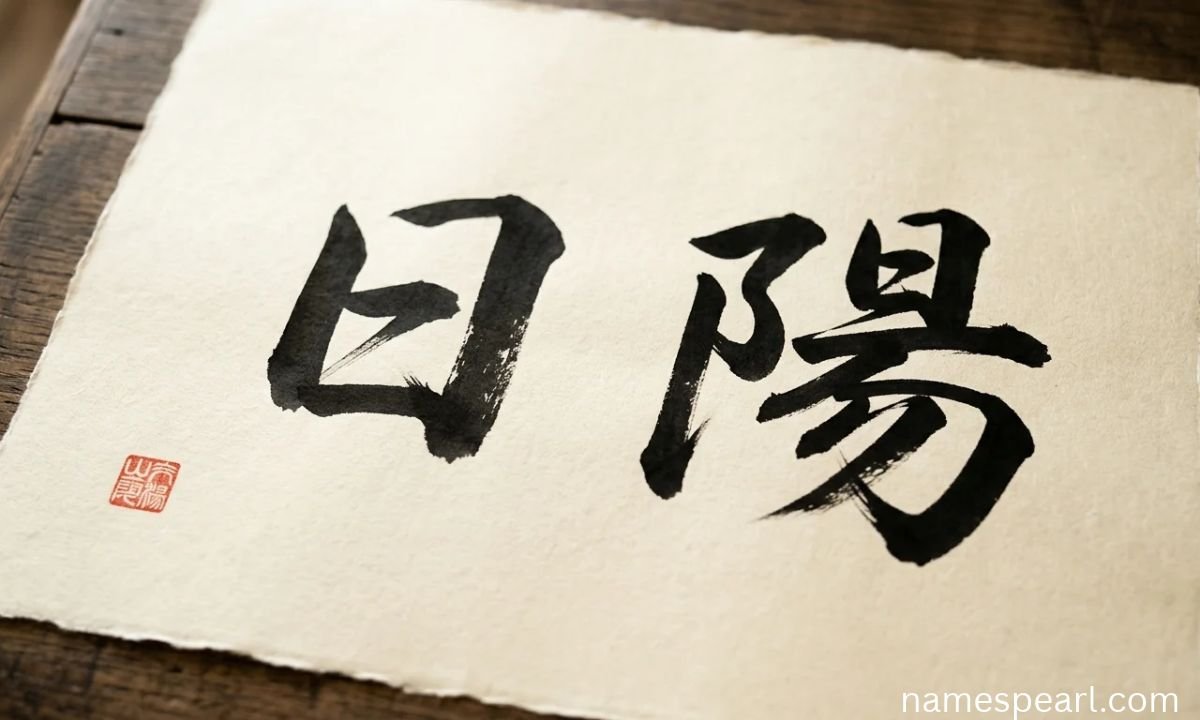
Traditional Japanese names that mean sun lean on bright and shining kanji such as 明 and 照, often with endings like -o, -ko or -hiko.
- Akio (明夫) — Bright man
- Akihiko (明彦) — Bright boy
- Akihito (明仁) — Bright, benevolent
- Akiko (明子) — Bright child
- Akemi (明美) — Bright beauty
- Akiyo (明代) — Bright generation
- Teruo (照夫) — Shining man
- Teruko (照子) — Shining child
- Terumi (照美) — Shining beauty
- Teruyo (照代) — Shining generation
- Terue (照恵) — Shining blessing
- Yōichi (陽一) — Sun, firstborn
- Yōji (陽二) — Sun, second son
- Asako (朝子) — Morning child
- Shōichi (昭一) — Bright, firstborn
- Shōji (昭二) — Bright, second son
- Shōzō (昭三) — Bright, third son
- Shōko (昭子) — Bright child
- Akitarō (明太郎) — Bright eldest son
Akihito is the best-known bearer, the Emperor Emeritus who reigned from 1989 to 2019. The -ichi, -ji and -zō endings once marked birth order.
Japanese Girl Names That Mean Sun or Solar Light
These girl names use 陽 and 明 for sun and brightness, and many end in -na, -ka or -mi. Himari and Hina have been favorites in recent years.
Sun and Sunflower Names
- Hina (陽菜) — Sun, greens
- Hinano (陽菜乃) — Sun, greens, of
- Hinako (陽菜子) — Sun, greens, child
- Himawari (向日葵) — Sunflower
- Haruna (陽菜) — Sun, greens
- Haruka (陽花) — Sun flower
- Harumi (陽美) — Sun beauty
- Haruno (陽乃) — Sun’s own
- Haruko (晴子) — Clear-sky child
- Yōka (陽花) — Sun flower
Bright and Sunset Names
- Akari (明里) — Bright village
- Akane (茜) — Madder red, sunset
- Akina (明菜) — Bright greens
- Akeno (明野) — Bright field
- Akiho (明穂) — Bright ear of grain
- Akimi (明美) — Bright beauty
- Asami (朝美) — Morning beauty
- Akie (明恵) — Bright blessing
- Akika (明香) — Bright fragrance
- Akisa (明咲) — Bright bloom
Himawari is written 向日葵, which literally says a flower facing the sun.
Japanese Boy Names Associated With the Sun and Brightness
Boy names often pair 陽 or 明 with a strength kanji, as in Yōta (陽太) or Akito (明斗).
Sun Names
- Haruki (陽輝) — Sun and radiance
- Haruaki (陽明) — Sun, bright
- Yōta (陽太) — Sun, great
- Yōtarō (陽太郎) — Sun, eldest son
- Yōhei (陽平) — Sun, peace
- Yōsuke (陽介) — Sun, helper
- Hinato (陽翔) — Sun, soar
Bright Names
- Akito (明斗) — Bright dipper
- Akihiro (明宏) — Bright, vast
- Akitaka (明孝) — Bright, devoted
- Akinobu (明信) — Bright, trust
- Akimasa (明正) — Bright, correct
- Akikazu (明和) — Bright harmony
- Akiyoshi (明義) — Bright, righteous
- Akihide (明秀) — Bright, excellent
- Akiteru (明照) — Bright, shining
- Akinori (明典) — Bright, rule
- Akitake (明武) — Bright, martial
- Akiyasu (明保) — Bright, protect
- Shōta (昭太) — Bright, great
- Shōgo (昭吾) — Bright, self
Say Yō with a long vowel, held about twice as long as a short o.
Rare Japanese Names With Sun-Related Kanji
Rare Japanese names that mean sun are easiest to find among long compounds built on 明 and 照. Many are uncommon today but fully real.
Rare Standouts
- Yūhi (夕陽) — Evening sun
- Kōmei (孝明) — Filial, bright
Teru- and Aki- Compounds
- Teruhisa (照久) — Shine, lasting
- Teruhiko (照彦) — Shining boy
- Terumasa (照正) — Shine, correct
- Teruyuki (照幸) — Shine, happiness
- Teruhiro (照宏) — Shine, vast
- Teruyoshi (照義) — Shine, righteous
- Terukazu (照和) — Shine, harmony
- Terutaka (照孝) — Shine, devoted
- Terunobu (照信) — Shine, trust
- Akihisa (明久) — Bright, lasting
- Akinari (明成) — Bright, become
- Akimitsu (明光) — Bright light
- Akitoshi (明俊) — Bright, talented
- Akiyuki (明幸) — Bright, happiness
- Akifumi (明文) — Bright, writing
- Akimichi (明道) — Bright path
- Akitsugu (明嗣) — Bright, heir
- Akitomo (明友) — Bright friend
Names Ending in -aki (明)
- Masaaki (正明) — Correct, bright
- Takaaki (貴明) — Noble, bright
- Hiroaki (弘明) — Broad, bright
- Nobuaki (信明) — Trust, bright
- Yoshiaki (良明) — Good, bright
- Tomoaki (智明) — Wise, bright
- Noriaki (則明) — Rule, bright
- Mitsuaki (光明) — Light, bright
- Toshiaki (俊明) — Gifted, bright
- Kazuaki (和明) — Harmony, bright
- Kiyoaki (清明) — Pure, bright
- Yasuaki (康明) — Healthy, bright
- Katsuaki (勝明) — Victory, bright
- Fumiaki (文明) — Letters, bright
- Naoaki (直明) — Honest, bright
- Hideaki (秀明) — Excellent, bright
- Teruaki (照明) — Shine, bright
- Sadaaki (貞明) — Faithful, bright
- Hisaaki (久明) — Lasting, bright
- Tadaaki (忠明) — Loyal, bright
- Shigeaki (重明) — Weighty, bright
- Tsuneaki (恒明) — Constant, bright
- Michiaki (道明) — Path, bright
Kōmei is also the name of the emperor who reigned from 1846 to 1867.
Japanese Names Featuring the Kanji for Sun
Here the character 日 sits right in the name. Hyūga uses the same kanji as Hinata, 日向, read a different way.
- Nikkō (日光) — Sunlight
- Nichiren (日蓮) — Sun, lotus
- Hyūga (日向) — Facing the sun
- Hiyoshi (日吉) — Sun, good luck
- Hinami (日南) — Sun, south
Nikkō is a shrine town in Tochigi, and Nichiren was a thirteenth-century Buddhist monk.
Japanese Names Inspired by the Sun Goddess Amaterasu
Amaterasu, whose name means “shining in heaven,” is the central sun deity of Shinto. These names come from her story and its cast.
- Amaterasu (天照) — Shining in heaven
- Ōhirume (大日孁) — Great sun woman
- Tenshō (天照) — Sino-Japanese reading
- Uzume (鈿女) — Dancer who lured her
- Ninigi (瓊瓊杵) — Her grandson
- Sarutahiko (猿田彦) — Guide god
- Tajikarao (手力男) — Strength god
- Omoikane (思兼) — Wisdom god
- Kagami (鏡) — Mirror
- Yata (八咫) — Sacred mirror size
- Iwato (岩戸) — Rock cave
- Ise (伊勢) — Her shrine home
- Susanoo (須佐之男) — Storm-god brother
- Tsukuyomi (月読) — Moon-god brother
- Izanagi (伊邪那岐) — Her father
- Jimmu (神武) — First emperor, descendant
In the myth she hid in a cave, and Uzume’s dance drew her out, which brought sunlight back.
Japanese Names Associated With Sunrise and New Beginnings
Japanese names that mean sun also include sunrise words like Akebono and Hinode. A few “first” names fit here too.
- Akebono (曙) — Dawn
- Shinonome (東雲) — Eastern clouds, daybreak
- Hinode (日出) — Sunrise
- Reimei (黎明) — Daybreak
- Asuka (明日香) — Tomorrow’s fragrance
- Asumi (明日美) — Tomorrow’s beauty
- Noboru (昇) — Rise, ascend
- Shōhei (昇平) — Rising peace
- Hajime (始) — Beginning
- Hatsune (初音) — First sound
- Hatsumi (初美) — First beauty
- Hatsue (初枝) — First branch
- Mirai (未来) — Future
In Japan, people watch the first sunrise of January, called hatsuhinode (初日の出). The “first” names above echo that custom.
Modern Japanese Names Linked to Warmth and Radiance
Modern sun names lean on 輝 (radiance) and 光 (light), and they sound natural in daily speech. Daiki and Kōki are familiar choices.
Radiance Names
- Daiki (大輝) — Great radiance
- Taiki (大輝) — Great radiance
- Kōki (光輝) — Shining light
- Yūki (優輝) — Gentle radiance
- Mitsuki (光希) — Light, hope
- Honoka (ほのか) — Soft glow
Light Names for Boys
- Mitsuo (光男) — Light man
- Mitsuhiro (光弘) — Light, broad
- Mitsuteru (光照) — Light, shine
- Mitsuhiko (光彦) — Light boy
- Mitsuyoshi (光義) — Light, righteous
- Mitsuyuki (光幸) — Light, happiness
- Mitsunobu (光信) — Light, trust
- Mitsutoshi (光俊) — Light, talented
- Mitsuharu (光晴) — Light, clear sky
- Kōichi (光一) — Light, firstborn
- Kōji (光二) — Light, second son
- Kōtarō (光太郎) — Light, eldest son
- Kōsuke (光輔) — Light, helper
- Kōhei (光平) — Light, peace
Warm and Light Names for Girls
- Mitsuko (光子) — Light child
- Mitsuyo (光代) — Light generation
- Mitsue (光江) — Light, inlet
- Atsumi (温美) — Warm beauty
- Atsuko (温子) — Warm child
Kōki and Daiki share the 輝 kanji, which means to shine.
Gender-Neutral Japanese Names With Sun-Inspired Meanings
Some sun names suit any gender. Hikaru is the clearest example, and Hinata and Asahi from earlier work the same way.
- Hikaru (光) — Light, radiance
- Hikari (光) — Light
- Haru (陽) — Sun
- Yō (陽) — Sun, positive
- Aki (明) — Bright
- Mei (明) — Bright
Haru can be written 陽 or 晴, and the sound stays the same while the meaning changes.
Short Japanese Names With Bright and Solar Associations
One-syllable and two-syllable sun names are easy to say and quick to write.
- Teru (照) — Shine
- Sei (晴) — Clear weather
- Asa (朝) — Morning
- Kō (晃) — Bright
- Shō (昇) — Rise
- Hino (日野) — Sun, field
Quick tip: Asa (朝) is also the everyday Japanese word for morning.
Japanese Names Connected to Daylight and Clear Skies
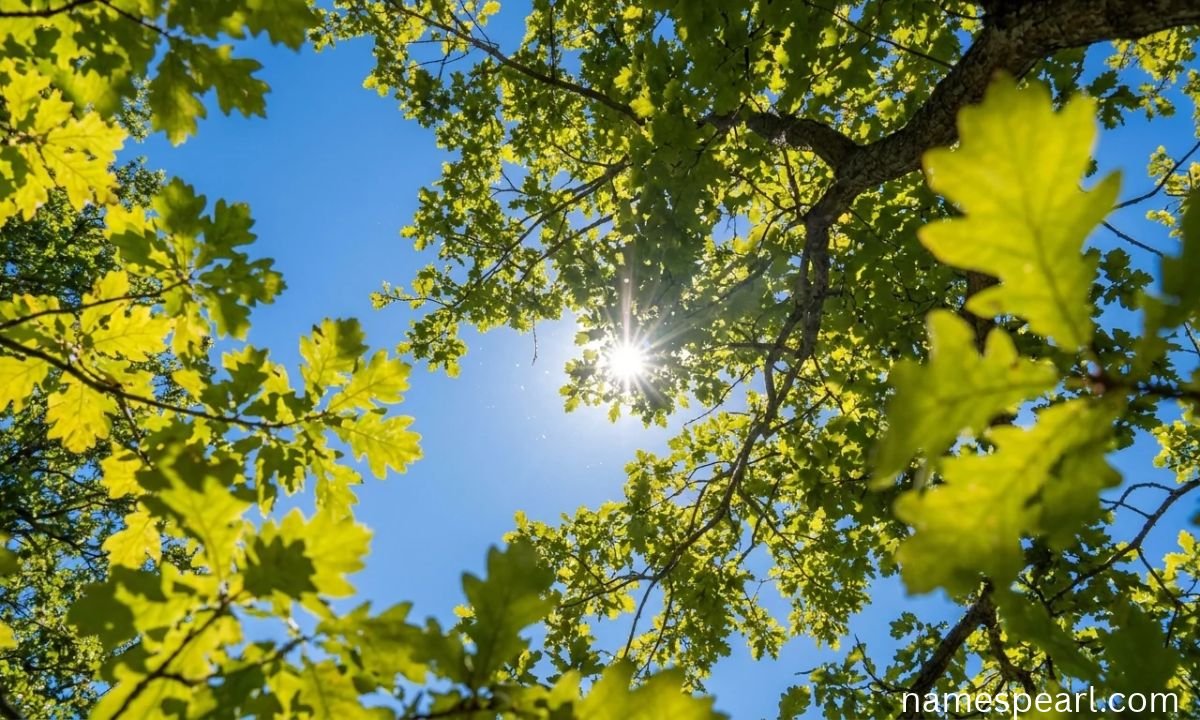
Clear-sky names, built on 晴 (hare, sei), suit families who like sunny weather. Sora adds the open sky itself.
- Haruo (晴男) — Clear-sky man
- Haruhiko (晴彦) — Clear-sky boy
- Harunobu (晴信) — Clear, trust
- Haruyo (晴代) — Clear generation
- Harue (晴恵) — Clear blessing
- Seiji (晴二) — Clear, second son
- Seiichi (晴一) — Clear, firstborn
- Seiya (晴也) — Clear-sky name
- Seika (晴香) — Clear fragrance
- Seiko (晴子) — Clear-sky child
- Seina (晴奈) — Clear, elegant
- Seito (晴人) — Clear-sky person
- Sora (空) — Sky
- Sorato (空翔) — Sky, soar
- Sorata (空太) — Sky, great
Takeda Shingen used the name Harunobu (晴信) before he took Buddhist vows.
Understanding Japanese Name Readings and Their Meanings
In Japan, one kanji can have several readings. The character 陽 is Yō in Yōko but Haru in Haruki. Some names also use nanori, special readings found only in names.
The same sound can come from different kanji. Haruto may be written 陽翔 for a soaring sun or 晴斗 for a clear sky. Hinata can be 日向 or 陽向, and both read sunny place or facing the sun.
Check both the writing and the sound before you settle on a name.
How to Choose a Japanese Name With a Sun-Related Meaning
Four short steps keep the choice simple.
- Decide the meaning you want: sun, dawn, brightness or clear sky.
- Pick the main kanji, such as 陽, 日, 暁 or 明.
- Add a second kanji for direction, like 向 (facing) or 翔 (soar).
- Say the full name beside your surname and check the reading.
Working example: you want a sun that rises. You choose 陽 and add 翔. The result is Haruto (陽翔), and beside the surname Tanaka it sounds smooth: Haruto Tanaka.
Japanese Sun Names With Kanji, Readings, Meanings, and Origins
This table sums up ten Japanese names that mean sun, with kanji and origin.
| Name | Meaning | Origin |
| Taiyō (太陽) | Sun | Japanese |
| Hinata (日向) | Sunny place | Japanese |
| Haruto (陽翔) | Sun, soaring | Japanese |
| Himari (陽葵) | Sun, hollyhock | Japanese |
| Asahi (旭) | Rising sun | Japanese |
| Akira (明) | Bright, clear | Japanese |
| Hiyori (日和) | Fine weather | Japanese |
| Akatsuki (暁) | Dawn | Japanese |
| Amaterasu (天照) | Shining in heaven | Shinto myth |
| Yōko (陽子) | Sun child | Japanese |
Frequently Asked Questions
Which Japanese names that mean sun are most popular?
Hinata, Haruto and Himari are common picks, while Taiyō (太陽) is the plain word for sun.
Which kanji gives Japanese names that mean sun their meaning?
日 (hi) and 陽 (yō, haru) are the main two. 暁, 明 and 照 add dawn and brightness.
Is Amaterasu used as a Japanese given name?
It’s very rare, since it’s the name of Shinto’s sun goddess. Teruko or Hinata offers a softer link.
Can the same sound have different meanings in Japanese sun names?
Writing decides it. Haruto can be 陽翔 for sun or 晴斗 for clear sky.
Which Japanese name means rising sun?
Asahi (旭 or 朝日) is the closest. Akebono and Akatsuki lean toward dawn.
How can I check a kanji’s meaning before choosing?
Look it up in a kanji dictionary such as Jisho.org, then ask a Japanese speaker.
Conclusion
What stands out most across this list is how much one second kanji changes a sun name. Japanese names that mean sun feel plain with 日 or 陽 alone, then gain direction with 向 or 翔. Hinata and Haruto show the pattern well, and Asahi shows how a single word can hold a whole sunrise.
Before you decide, ask a Japanese speaker to confirm the kanji, the reading and how the name sounds with your surname. A shortlist of three is enough. Write each one in kanji and in romaji, then see which still feels right after a few days.
About the Author
I’m Elena Morgan, writer at Namespearl. I compile name ideas and meanings across cultures. This guide to Japanese names that mean sun is meant to save you time, and it keeps kanji and readings together so the meanings stay clear. For Japanese names, I focus on what each character means. Pick your favorite and make it your own.
You May Also Like to Explore: Names That Mean Sky, Names That Mean Sand