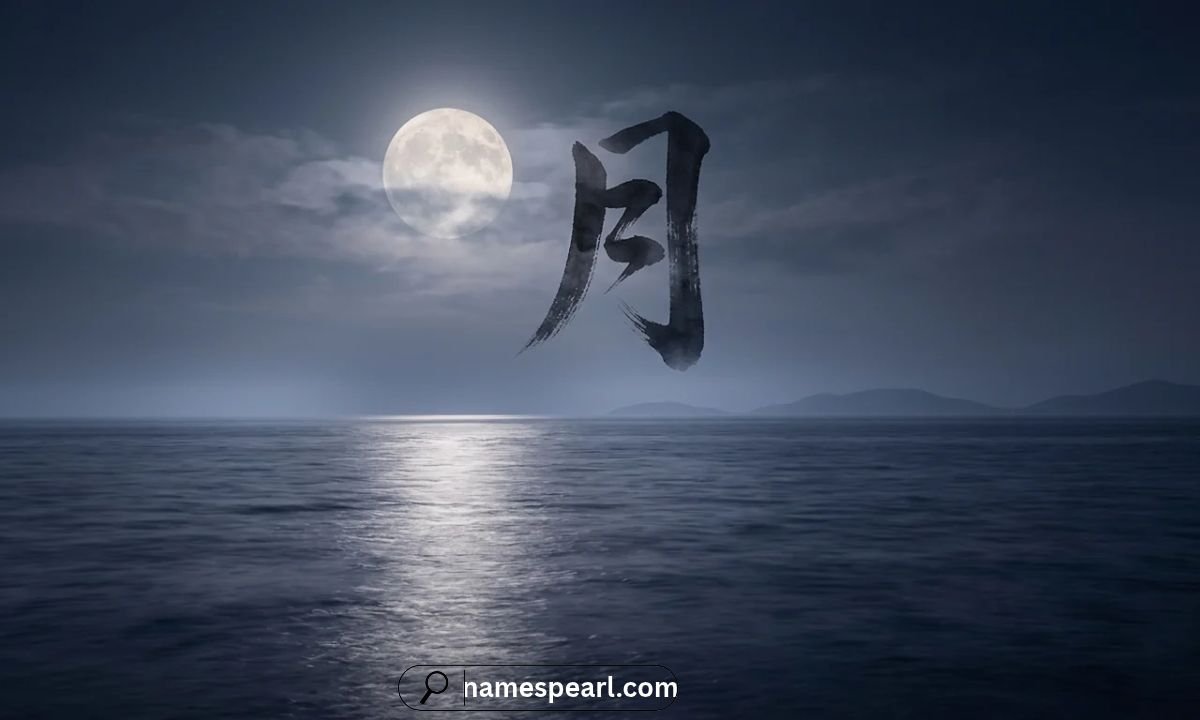

Japanese names that mean moon often use the kanji 月, read as tsuki alone and zuki in names like Mizuki and Hazuki. This character opens the door to many beautiful name variations.
The traditional Japanese calendar followed lunar cycles, and families still celebrate tsukimi, the autumn custom of moon viewing.
Explore 240+ Japanese moon names for girls, boys, pets, and characters, with kanji, meanings, and moonlight-inspired options. Quick picks: Mizuki, Tsukiko, and Saku..
Comparison of Japanese Moon Name Styles
Here’s a quick look at the main styles of Japanese names that mean moon, so you can spot your favorite before the full lists.
| Name Style | Source | Vibe | Best For |
| Moon kanji names | 月 character | Soft, classic | Girls, unisex |
| Lunar month names | Old calendar | Seasonal, poised | Girls |
| Moon-viewing names | Tsukimi custom | Calm, autumn | Any child |
| Moonlight and night | Poetic words | Dreamy | Girls, pets |
| Deity and folklore | Myth, legend | Bold, storied | Characters |
| Phase names | Crescent, full | Visual, clear | Unisex |
Japanese Moon Names and Their Cultural Significance
Japanese names that mean moon often come straight from the lunar calendar, where each month once had its own poetic name.
Top Picks
- Tsukiko — moon child (月子)
- Mizuki — beautiful moon (美月)
- Hazuki — leaf moon, eighth month (葉月)
- Satsuki — fifth lunar month (皐月)
- Tsukino — of the moon (月乃)
More Moon Names
- Tsuki
- Tsukiha
- Tsukiho
- Mutsuki
- Kisaragi
- Yayoi
- Uzuki
- Fuzuki
- Tsukie
- Getsuka
The old names for the first four lunar months are:
- Mutsuki
- Kisaragi
- Yayoi
- Uzuki
Satsuki represents the fifth month, while Hazuki means “leaf month” and refers to the eighth. Fuzuki is another reading of Fumizuki, the seventh-month name.
Two rarer options are Tsukie, a modern pairing with 月, and Getsuka, which uses the more formal getsu reading.
Hazuki, Satsuki, and Mutsuki remain popular month-linked choices. My pick is Hazuki for its simple pronunciation.
Understanding Tsuki and the Japanese Kanji for Moon
Most Japanese names that mean moon use the kanji 月, read tsuki alone but usually zuki after another syllable, as in Mizuki and Hazuki.
Top Picks
- Mitsuki — beautiful or bright moon (美月, 光月)
- Yuzuki — evening moon (夕月)
- Natsuki — summer moon (夏月)
- Kazuki — harmony moon (和月)
- Akizuki — autumn moon (秋月)
More Kanji Names
- Shizuki
- Kizuki
- Hizuki
- Kozuki
- Rizuki
- Suigetsu
- Yoizuki
- Asazuki
- Mazuki
Mizuki and Mitsuki are popular Japanese moon names that can both use 美月, so the intended reading matters. Shizuki (静月), Kizuki (希月), and Hizuki (陽月) pair 月 with calm, hope, and sun. Mazuki is a rarer zuki-style name.
Names like Mizuki, Natsuki, and Yuzuki share the zuki ending. Suigetsu (水月) means moon on water, while Yoizuki (宵月) and Asazuki (朝月) describe the evening and morning moon.
Traditional Japanese Names With Moon-Related Meanings
Traditional Japanese names that mean moon tend to pair 月 with words for night, princess or prince, and family names built on moon kanji belong here too.
Top Picks
- Tsukiyo — moonlit night (月夜)
- Tsukihime — moon princess (月姫)
- Tsukihiko — moon prince (月彦)
- Tsukimaru — moon, boy’s suffix (月丸)
- Meigetsu — bright harvest moon (名月)
More Traditional Names
- Mochizuki
- Tsukioka
- Tsukishima
- Tsukiyama
- Tsukimoto
- Tsukimori
- Tsukihara
- Gassan
- Yamanashi
- Tsukio
- Tsukinosuke
Mochizuki, Tsukioka, Tsukishima, Tsukiyama, Tsukimoto, and other options are family names, best suited for middle names or story characters. Mochizuki (望月) means full moon, while Gassan (月山) refers to a mountain in Yamagata. Yamanashi (月見里) has a poetic moon-viewing meaning.
- Tsukio: A simple, classic-sounding moon name.
- Tsukinosuke: Uses the traditional -nosuke ending, making it ideal for historical characters.
Tsukishima, a Tokyo district, shows how moon-related Japanese names also appear on maps.
Japanese Girl Names Associated With the Moon and Moonlight
Japanese girl names that mean moon include direct moon kanji as well as names for night and soft light, and the notes mark which is which.
Top Picks
- Sayo — little night (小夜)
- Sayoko — little night child (小夜子)
- Akari — light, glow (association)
- Hikari — light (association)
- Nozomi — hope, wish (望, also in 望月)
More Girl Names
- Tsukina
- Tsukine
- Tsukika
- Yozora
- Hoshiko
- Hoshino
- Yūgao
- Hotaru
- Teruko
- Terue
- Sazuki
- Ritsuki
Sayo and Sayoko evoke a peaceful night, while Yozora (夜空) means night sky. Tsukina, Tsukine, and Tsukika are modern names combining 月 with other kanji.
- Sazuki: A possible variant of Satsuki, depending on the kanji.
- Ritsuki: A modern name pairing 月 with another character.
Yūgao is a dusk-blooming flower from The Tale of Genji, Hotaru means firefly, and Teruko and Terue use 照 (shine). Tsukino is also associated with Usagi Tsukino from Sailor Moon. Names ending in -ko, -na, and -ka are common feminine styles.
Japanese Boy Names With Lunar Meanings and Associations
Japanese names that mean moon for boys are fewer, yet a handful are well established. Some use 月 directly, and others borrow kanji for phases or light.
Top Picks
- Tsukito — moon person (月人)
- Saku — new moon (朔)
- Mitsuru — full, complete (満)
- Hikaru — shine, light (光, 輝)
- Seiya — starry night (星夜)
More Boy Names
- Yoru
- Kōgetsu
- Akito
- Akatsuki
- Akira
- Teruo
- Hokuto
- Ryūsei
- Tsukiya
- Tsukihisa
- Tsukiteru
- Tsukita
- Tsukihiro
Saku uses the kanji for the first day of the lunar month, making it a clear moon-related boy’s name. Mitsuru and Hikaru are unisex names associated with fullness and brightness.
These five names combine 月 with masculine-style endings:
- Tsukiya (月矢): Moon arrow.
- Tsukihisa (月久): Enduring moon.
- Tsukiteru (月輝): Shining moon.
- Tsukita and Tsukihiro: Rarer modern combinations.
Kōgetsu (皓月) means bright moon, while Hokuto means Big Dipper, Ryūsei means shooting star, and Akatsuki means dawn.
Rare Japanese Names Featuring Moon-Related Kanji
Rare Japanese names that mean moon often use 月 in an unusual position or pair it with a second character for a specific image.
Top Picks
- Mikazuki — crescent moon (三日月)
- Katsura — legendary moon tree (桂)
- Kagetsu — flower and moon (花月)
- Runa — Luna-style modern reading
- Seigetsu — clear moon (清月)
More Rare Moon Names
- Gekka
- Hatsuki
- Tsukimura
- Tsukigata
- Tsukishiro
- Setsugekka
- Yūzukiyo
- Kōzuki
- Tsukida
- Gekkei
- Katsurako
- Fūgetsu
- Taiin
- Hyōrin
- Togetsu
- Sōgetsu
- Keigetsu
Mikazuki means “third-day moon,” a thin crescent after the new moon. Katsura comes from a lunar tree legend, while Katsurako adds the child suffix. Runa is a newer reading with varying kanji.
Taiin (太陰) and Hyōrin (氷輪) are poetic moon terms. Togetsu (渡月) recalls Kyoto’s Moon Crossing Bridge, while Sōgetsu (草月) is a modern ikebana school.
– Keigetsu (桂月): A poetic moon term and the pen name of Meiji-era writer Ōmachi Keigetsu.
Gekka means under the moon, Gekkei means moon laurel, and Fūgetsu combines wind and moon. Setsugekka represents snow, moon, and flowers.
Tsukimura, Tsukigata, Tsukida, and Kōzuki are surnames. Tsukishiro means pale bluish white, while Yūzukiyo describes a moonlit evening.
Most rare Japanese moon names suit fictional characters or middle names better than everyday first names.
Japanese Names Inspired by Tsukimi and Moon-Viewing Traditions
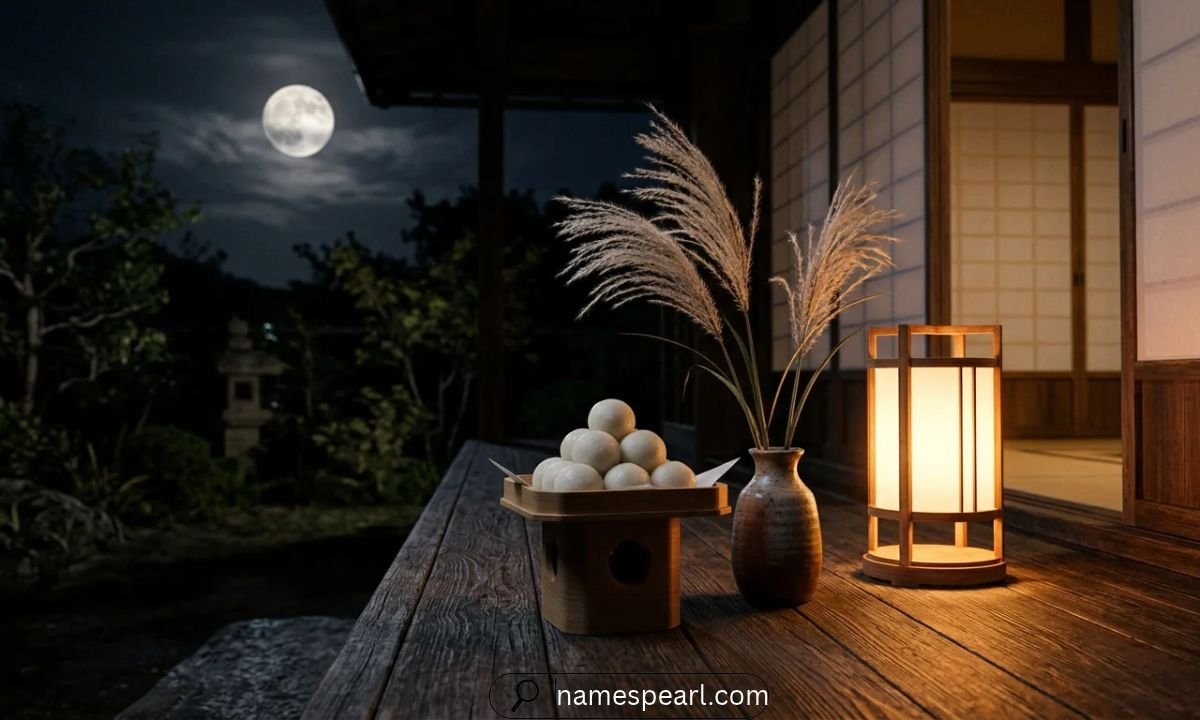
Japanese names that mean moon in spirit, if not in kanji, often come from tsukimi, held on the fifteenth night of the eighth lunar month with pampas grass, rice dumplings and autumn flowers.
Top Picks
- Tsukimi — moon viewing (月見)
- Usagi — rabbit, moon rabbit (兎)
- Kikyō — balloon flower (桔梗)
- Nadeshiko — fringed pink (撫子)
- Hagi — bush clover (萩)
More Moon-Viewing Names
- Susuki
- Ominaeshi
- Fujibakama
- Obana
- Kuzu
- Aki
- Akiko
- Akiha
- Akino
- Akiho
- Chiaki
- Kiku
- Kikuko
- Akizakura
- Momiji
- Kuri
- Mochi
- Dango
- Tsukimisō
- Tsukikusa
- Tsukimizuki
- Jūgoya
- Jūsanya
Among Japanese names that mean moon by association, Hagi, Susuki (also called Obana), Kuzu, Nadeshiko, Ominaeshi, Fujibakama and Kikyō make up the seven flowers of autumn. Many people in Japan see a rabbit pounding rice cake on the moon, which is why Usagi fits so well. Akiho joins Akiko, Akiha and Akino as another autumn name for a child born around tsukimi.
Jūgoya (十五夜) is the fifteenth night itself, and Jūsanya (十三夜) the thirteenth night of the ninth month, when chestnuts (Kuri) are served. Tsukimizuki (月見月) is an old name for the eighth month, Tsukimisō (月見草) is evening primrose, and Akizakura (秋桜) is the cosmos. Mochi, Dango and Kuzu make cute pet names.
Names Connected to the Full Moon and Lunar Phases
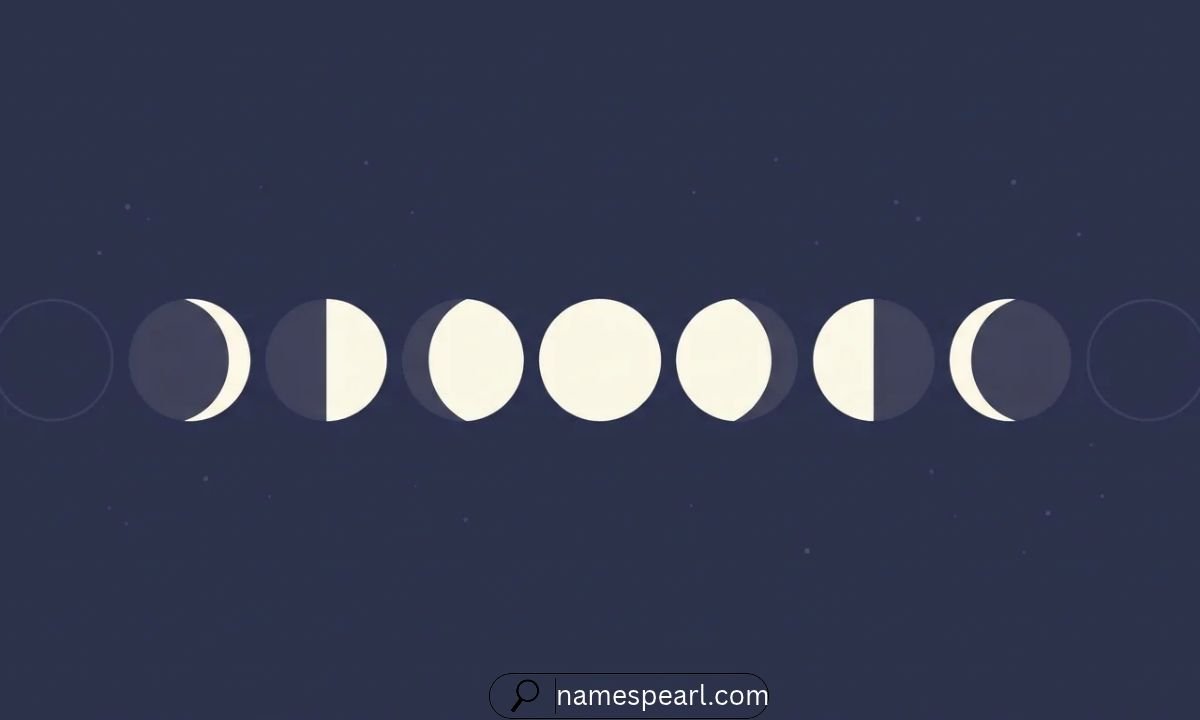
Japanese names that mean moon can also describe a single phase, since the old calendar gave the moon a different name on most nights.
Top Picks
- Mangetsu — full moon (満月)
- Izayoi — sixteenth-night moon (十六夜)
- Ariake — moon at dawn (有明)
- Shingetsu — new moon (新月)
- Hangetsu — half moon (半月)
More Phase and Fullness Names
- Matsuyoi
- Fukemachizuki
- Nijūsanya
- Yumiharizuki
- Bigetsu
- Zangetsu
- Mugetsu
- Gyōgetsu
- Jōgen
- Kagen
- Tachimachizuki
- Imachizuki
- Nemachizuki
- Sakuya
- Sakutarō
- Gen
- Nozomu
- Mitsuko
- Mitsuo
- Mitsue
- Mitsuyo
- Michiru
Matsuyoi (待宵) is the fourteenth night, and Izayoi is the sixteenth, its name meaning “hesitating” because the moon rises later. Tachimachizuki, Imachizuki, Nemachizuki and Fukemachizuki cover nights seventeen to twenty, and Nijūsanya is the twenty-third night.
Among phase-based Japanese names that mean moon, Jōgen and Kagen are the upper and lower half moons, Yumiharizuki is the “drawn bow” moon, and Bigetsu is the “eyebrow” crescent. Zangetsu and Gyōgetsu are dawn moons, and Mugetsu is a moonless night. Sakuya and Sakutarō use 朔, the new-moon kanji, Gen (弦) is a half-moon bowstring, and Nozomu uses 望, tied to the full moon. The Mitsu- names only hint at the moon.
- Michiru uses 満, meaning full, the same character as Mitsuru, so it suggests the full moon only by association.
Most Japanese names that mean moon in this list work better as poetic or nickname choices than as legal names.
Japanese Names Associated With Moonlight and Night Skies
Some Japanese names that mean moon describe the glow of the moon or the sky around it, and where a name only suggests light or night, the note says association.
Top Picks
- Gekkō — moonlight (月光)
- Tsukikage — moon glow (月影)
- Tsukiakari — moonlight (月明かり)
- Sayaka — clear, bright (association)
- Subaru — Pleiades cluster (昴)
More Night Sky Names
- Hoshi
- Hoshina
- Seira
- Sora
- Ginga
- Yūko
- Yūka
- Yūna
- Terumi
- Sumika
- Kiyoka
- Shizuka
- Shinonome
- Yoake
- Sayako
- Hoshizukiyo
- Akebono
- Kagami
- Mayo
In Tsukikage, 影 meant light as well as shadow in classical Japanese. Subaru is the Japanese name for the Pleiades, Hoshizukiyo (星月夜) is a starry, moonlit night, and Kagami is a mirror, a comparison for a still full moon. Mayo (真夜) means deep night, Yūko, Yūka and Yūna use the kanji for evening, and Shinonome, Yoake and Akebono describe daybreak. Quick tip: Sayaka is easy to pronounce abroad, while Gekkō and Tsukikage suit characters or pets more than newborns.
Seasonal Japanese Names Linked to Lunar Traditions
Japanese names that mean moon often hide in the old month names. Before 1873, Japan followed a lunar calendar, and each month kept a poetic name.
Top Picks
- Minazuki — sixth month (水無月)
- Fumizuki — seventh month (文月)
- Nagatsuki — long month, ninth (長月)
- Kannazuki — tenth month (神無月)
- Shimotsuki — frost month, eleventh (霜月)
More Seasonal Names
- Shiwasu
- Sanaezuki
- Kikuzuki
- Kazemachizuki
- Kamiarizuki
- Oborozuki
- Oborozukiyo
- Oboro
- Kangetsu
- Reigetsu
- Fuyutsuki
- Shungetsu
- Shūgetsu
Kannazuki is the “month without gods,” because the gods were said to gather at Izumo Shrine, where the month is called Kamiarizuki. Japan switched to the Gregorian calendar on January 1, 1873, which is why month names like these still feel seasonal and work as Japanese names that mean moon with a real calendar link.
Sanaezuki and Kazemachizuki are old names for early summer, and Kikuzuki is the chrysanthemum month. Oborozuki, Oboro and Oborozukiyo describe the hazy spring moon, and Oborozukiyo is also a character in The Tale of Genji. Kangetsu and Reigetsu are the winter moon, and Shungetsu and Shūgetsu the spring and autumn moon.
Fair warning: month names are rare as first names, so treat most of these as poetic choices.
Japanese Names Inspired by Moon Deities and Folklore
Moon folklore gives Japanese names that mean moon a story to go with them. The best known is Princess Kaguya, who is found inside a glowing bamboo stalk and later returns to the moon.
Top Picks
- Kaguya — moon princess of folktale
- Tsukuyomi — Shinto moon god (月読)
- Jōga — moon goddess (嫦娥)
- Gakkō — moonlight bodhisattva (月光)
- Hagoromo — feather robe (羽衣)
More Folklore Names
- Kaguyahime
- Gyokuto
- Taketori
- Kuramochi
- Ishitsukuri
- Keiko
- Tsukiusagi
Among folklore Japanese names that mean moon, Tsukuyomi appears in the Kojiki, where he is born from the right eye of the god Izanagi. Jōga is the Japanese reading of Chang’e, the Chinese moon goddess, and Gakkō Bosatsu is the Moonlight Bodhisattva. Kaguyahime, Taketori, Kuramochi and Ishitsukuri come from the Bamboo Cutter tale, where Taketori is the cutter and the last two are princes courting Kaguya. Gyokuto (玉兎) is the jade rabbit, and Keiko can be written 桂子, using the moon-tree character.
- Tsukiusagi means moon rabbit, the figure many people in Japan see pounding rice cake on the moon.
These are story names, so they suit characters better than babies. For Japanese names that mean moon with a mythic edge in a game or novel, Kaguya and Tsukuyomi give you the most material.
Modern Japanese Names With Lunar Associations
Modern Japanese names that mean moon often start with sound: parents choose a moon kanji, then add a second character for the image they like.
Top Picks
- Tsukisa — moon bloom (月咲)
- Nazuki — moon with Na kanji (奈月)
- Hozuki — grain-ear moon (穂月)
- Misuki — beautiful moon (美月)
- Mika — beautiful moon (美月)
More Modern Names
- Kasumi
- Mashiro
- Shinju
- Shirogane
- Ginko
- Kirara
- Akemi
- Kiyomi
- Sumiko
- Kiyoshi
- Akio
- Aizuki
Shinju (真珠) means pearl, a classic partner of the moon. Mashiro (真白) is pure white, Shirogane (白銀) is silver, and Ginko (銀子) means silver child, the colors of moonlight.
- Aizuki (愛月) means loved moon, a modern kanji combination rather than an old name.
Kasumi (霞) means mist, and Kirara (煌) means sparkle. Akemi, Kiyomi, Sumiko, Kiyoshi and Akio are bright and clear, so they are loose associations. These modern Japanese names that mean moon rely on sound, so settle the kanji after the sound.
Short Japanese Names With Moon-Related Meanings
Short Japanese names that mean moon are easy to say and write. Tsuki, Saku, Gen, Yoru, Aki, Sora and Hoshi are already covered above, and these add a few more.
Top Picks
- Kei — moon tree reading (桂)
- Mei — bright (明)
- Sei — clear (清)
- Kō — bright, white (皓)
- Yū — evening (夕)
More Short Names
- Kage
- Yoi
- Gin
- Getsu
- Mii
- Mizu
- Mitsu
- Yuzu
- Natsu
Among short Japanese names that mean moon, Kei is one reading of 桂, the moon-tree character. Kage (影) can mean moonlight, Yoi (宵) is early evening, and Gin (銀) is silver. Mei, Sei and Kō have many kanji, so check the exact character.
Most short moon names are nicknames of longer ones:
- Getsu (月) is the on-yomi reading of the moon kanji.
- Mii and Mizu are short for Mizuki.
- Mitsu is short for Mitsuki.
- Yuzu is short for Yuzuki, and it is also the citrus fruit.
- Natsu is short for Natsuki.
Nicknames like these usually take -chan, as in Mii-chan.
Japanese Moon Names: Kanji, Readings, and Gender Usage
Gender in Japanese names that mean moon often shows in the ending. Girls’ names lean on -ko, -ka, -na and -mi, while boys’ lean on -to, -ya, -ru and -maru.
Top Picks
- Shion — aster, autumn flower (紫苑)
- Sakuto — new-moon person (朔人)
- Hakuto — white rabbit (白兎)
- Yūto — evening person (夕人)
- Yūya — evening night (夕夜)
The kanji 月 has three main readings: tsuki is the native reading, zuki is the form it takes inside names, and getsu or gatsu is the Chinese-derived reading used in compounds such as Mangetsu and Meigetsu.
Unisex moon names include Kazuki, Mitsuki, Natsuki, Hikaru, Subaru, Hotaru and Shion. Tsukiko and Tsukika read as feminine, Tsukito and Sakuto as masculine, and Mizuki leans female while Kazuki leans male. Many Japanese names that mean moon work for any child, so ask how a family says the name before writing it down.
How to Choose a Japanese Name With a Moon Meaning
Choosing from Japanese names that mean moon starts with the kanji, since the characters decide both the meaning and the reading.
- Match the style to the use. Mizuki and Natsuki suit everyday life in Japan, Mikazuki and Izayoi read as poetic, and Mochi or Usagi fit a pet.
- Check pronunciation abroad. The ts- in Tsukiko is a short, crisp sound, and names ending in zuki are usually easier.
- Look at the story behind the name. Tsukuyomi and Kaguya come with myths, while month names such as Satsuki come with the calendar.
- Ask a Japanese speaker to confirm the reading, particularly for rare combinations like Tsukisa or Nazuki.
- Shortlist by feel first. Read ten Japanese names that mean moon aloud and mark the three that make you smile, then check each meaning.
How To Create Your Own Japanese Moon Name
You can build your own Japanese names that mean moon from real kanji in four steps.
- Pick the moon element. Use 月 (tsuki), 朔 (new moon), 望 (full moon), 夜 (night) or 兎 (rabbit).
- Add a partner kanji. Choose the image you want: 美 (beauty), 夏 (summer), 夕 (evening), 光 (light) or 和 (harmony).
- Check the reading. 月 usually becomes zuki after another syllable, so 夕 plus 月 reads Yuzuki.
- Say it with a surname. Ask a Japanese speaker to confirm the reading and the feel.
Worked example: 夏 (summer) plus 月 gives Natsuki, a summer moon, and swapping 夏 for 美 gives Mizuki, a beautiful moon.
Japanese Moon Names With Kanji, Readings, Meanings, and Origins
This table gathers ten of the best-known Japanese names that mean moon, with their meanings and origins for quick reference.
| Name | Meaning | Origin |
| Mizuki | Beautiful moon | 美月 kanji |
| Tsukiko | Moon child | 月子 kanji |
| Hazuki | Leaf moon | Old eighth month |
| Satsuki | Fifth month | Old lunar calendar |
| Mikazuki | Crescent moon | 三日月 kanji |
| Tsukito | Moon person | 月人 kanji |
| Saku | New moon | 朔 kanji |
| Kaguya | Moon princess | Bamboo Cutter tale |
| Izayoi | Sixteenth-night moon | 十六夜 kanji |
| Mangetsu | Full moon | 満月 kanji |
Frequently Asked Questions
What kanji do most Japanese names that mean moon use?
Most Japanese names that mean moon use 月, read tsuki alone and zuki inside names like Mizuki and Hazuki.
What does Mikazuki mean?
Literally “third-day moon,” the thin crescent visible soon after the new moon.
Which Japanese names mean moon suit boys?
Tsukito, Saku and Sakuto fit well, and Kazuki and Mitsuki work for either gender.
What is tsukimi, and does it inspire names?
An autumn moon-viewing night that gives us Tsukimi, Usagi, Hagi and Susuki.
Can the old lunar month moon names be given to children?
Satsuki, Mutsuki and Yayoi are used today, while Kannazuki and Minazuki are rare, poetic choices.
How do I choose the right kanji?
Ask the family which characters they use, since 美月 alone can be read by Mizuki, Mitsuki or Mika.
Conclusion
Japanese moon names carry different meanings, from Mizuki’s moon beauty to Mikazuki’s crescent and Kaguya’s legendary story. Traditional names like Hazuki and Satsuki also reflect Japan’s lunar history.
Whether you prefer Shizuki, Tsukito, Sayo, or Mochi, choose a name that feels meaningful to you. Always check its kanji, pronunciation, and intended meaning before making your final choice.
About the Author
I’m Elena Morgan, writer at Namespearl. I compile name ideas and meanings across cultures, with a soft spot for names that carry a clear image. This guide to Japanese names that mean moon is meant to save you time. Pick your favorite and make it your own.
You May Also Like to Explore: Japanese Names That Mean Sun | Japanese Names That Mean Star